
What Is Inflation and How Does It Affect Your Money in Mexico?
21 Sep 2026
You leave the supermarket with the same grocery bag you had a year ago, but it holds fewer things. Or you get to the tortilla shop and, with the same banknote, you get fewer tortillas. That feeling you notice in your shopping cart, not in your bank statement, is inflation. Prices go up and your money buys less.
With this article, we’re not going to throw complicated formulas at you or scare you. We simply want you to understand what inflation is, how INEGI measures it and, most importantly, how you can calculate how much your purchasing power has decreased using official data.
Prices go up while your banknote stays the same
Inflation is actually pretty easy to understand. It’s not that “the avocado went up.” That can happen because of a bad harvest or because demand is high during a certain season. Inflation is the general increase in prices. In other words, when many goods and services become more expensive on average.
If the price of a kilo of avocados goes up this week because there was less production, that alone doesn’t mean there is more inflation. One product can become more expensive while others stay at the same price or even become cheaper. Inflation appears when you see this increase more broadly across the goods and services people consume.
That’s why, even if some products become cheaper, if most prices go up, your money doesn’t go as far. It’s not about one product, but about the entire basket of goods and services that households buy. In Mexico, INEGI measures this using the National Consumer Price Index (INPC), which tracks the prices of nearly 160,000 products every two weeks.
So when you hear that “inflation was 3%,” it doesn’t mean that everything went up by exactly 3%. Some products increased more, others less, and some even became cheaper. What that percentage tells you is how the overall price level changed. And that’s where you feel the hit, because if your income stays the same while prices go up, the same amount of pesos no longer fills the same shopping cart. It’s not about one product, but about the entire basket of goods and services households buy.
How INEGI measures inflation
Let’s look at how INEGI measures inflation. Obviously, it can’t go to every home in the country and ask each family how much they spent. Instead, it uses the National Consumer Price Index (INPC). This index was created to measure how the prices of a representative basket of goods and services consumed by Mexican households change over time.
The basket includes food, housing, transportation, education, clothing, services and many other everyday expenses. Products don’t all have the same weight in the calculation either. The structure also takes into account how important each category is within household spending.
The basket and its weights were updated in 2024 to better reflect what Mexican households actually buy today. If you want to see how the basket is structured and how much weight each product has, you can check the methodology and data directly on the INEGI’s official INPC page.
As we mentioned, the INPC is calculated every two weeks. INEGI publishes the first-half-of-the-month figure around the 25th, and the monthly figure around the 10th of the following month (if the date falls on a weekend or holiday, it is brought forward). This lets you see something much more useful than wondering whether tomatoes cost five pesos more today. You can see how the overall price level is changing over time.
Headline and core inflation
When you look at INEGI data, you’ll come across two concepts that sound more complicated than they really are: headline inflation and core inflation.
Headline inflation is the figure you see in the news. It’s the full number, including everything in the INPC basket. Core inflation, on the other hand, is like looking at the picture without so much “noise.” It separates out prices that can move sharply because of external factors, such as weather or government regulations.
For example, the non-core component includes agricultural products (fruit, vegetables and meat), energy products (gasoline, gas and electricity) and government-authorized fees. These prices can rise or fall sharply because of a poor harvest, a production problem or changes in regulations.
Core inflation focuses on goods and services, which tend to move more steadily. This gives you a clearer idea of the underlying direction of prices without the sharp ups and downs of certain products. If you want to see both figures, you can find them in the official INPC tables from INEGI.
Where does inflation stand in Mexico in 2026?
Let’s get into the actual numbers so you’re not left with just the theory. At the time this article was written, the latest monthly figure published by INEGI corresponded to August 2026. Annual headline inflation stood at 3.26%. In other words, the overall price level measured by the INPC was 3.26% higher than a year earlier.
Annual core inflation, meanwhile, stood at 3.83%. Within that figure, goods recorded an annual variation of 3.32% and services 4.32%. So, is 3.26% high or low? A useful reference is the target set by the Bank of Mexico. Banxico maintains an annual inflation target of 3%, with a plus or minus one percentage point variability interval. In other words, between 2% and 4%. With inflation at 3.26% in August, it remains within that target range. It’s not perfect, but it hasn’t moved outside the range.
Calculate how much your money has lost
This is where inflation stops being a percentage you hear on the news and becomes something much more personal. INEGI has an official inflation calculator that lets you compare two periods. If you want to use it, just follow these steps:
- Open INEGI’s inflation calculator. Go to the inflation calculator on the INEGI website.
- Choose the starting and ending months. For example, if you want to know how much your money has lost over the last year, select August 2025 as the starting month and August 2026 as the ending month.
- Read the accumulated inflation percentage. The calculator will show you the accumulated inflation for that period.
- Apply it to one of your own amounts. Take your salary, rent or savings and apply that percentage. For example, if accumulated inflation was 3.26% and your salary was 10,000 pesos, you would need approximately 10,326 pesos today to buy the same things you could buy a year ago.
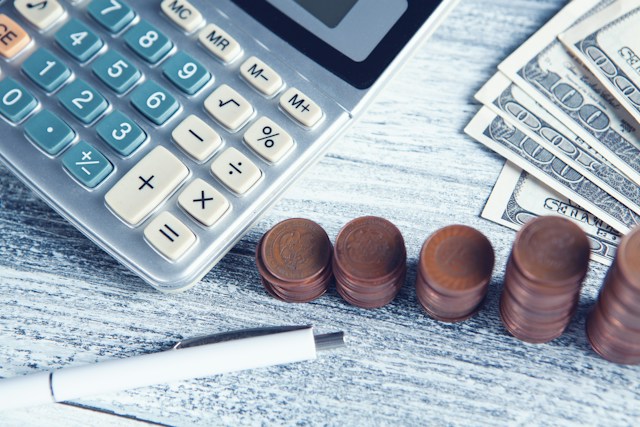
Let’s look at a simple example using the latest annual figure available. Between August 2025 and August 2026, annual inflation measured by INEGI was 3.26%. This means that if something cost you $500 a year earlier and increased at exactly the same rate as the overall price level, the calculation would be:
$500 × 1.0326 = $516.30
You would need approximately $516.30 in August 2026 to buy what $500 represented a year earlier, assuming that purchase had followed headline inflation exactly. This does not mean that every product you used to buy for $500 now costs $516.30. Your personal spending can increase more or less than the INPC. The exercise simply helps put pesos and cents behind a percentage that, on its own, doesn’t tell you much.
Who loses the most when prices rise?
Not everyone experiences inflation in the same way. Someone who keeps their money in cash under the mattress or in a savings pool loses purchasing power directly. Think of it this way: the same pesos buy fewer things every month.
The same happens to someone whose salary doesn’t get updated. If your income stays the same while prices rise, your standard of living falls. On the other hand, someone who earns money in another currency, such as US dollars, may experience inflation differently depending on the exchange rate.

Options for protecting what you earn
There is no magic bullet for protecting your money from inflation, and certainly not one that works the same way for everyone. But there are practical things you can do to take better care of what you earn.
The first one is much less exciting than talking about markets, but it can be more useful: know how much you spend and compare prices. A budget can help you spot which expenses are increasing and decide where you can make adjustments. Sometimes switching brands or shopping somewhere else can make a meaningful difference.
There are also different regulated alternatives for saving in Mexico. Before choosing one, it’s worth checking who offers the product, what regulations apply, what it costs and what protection applies to your money. CONDUSEF is an official reference for information about financial products and institutions.
Another option some people use is digital dollars or stablecoins, such as USDC. These assets aim to maintain a value close to the US dollar, which means their equivalent value in pesos also depends on the USD/MXN exchange rate. At B4bit, you can convert pesos to USDC and review the fees before confirming. If you want to better understand how pesos, transfers and digital dollars are connected, check out our guide on SPEI and crypto.
But keeping part of your money in a stablecoin doesn’t eliminate risk either. If the Mexican peso strengthens against the dollar, the same amount of dollars or USDC converts into fewer pesos. USDC is a digital asset, not a bank deposit or a savings account protected by IPAB.

Do the math with your own money
The next time you hear the inflation rate on the news, try something different: open INEGI’s inflation calculator, enter how much you earned a year ago and calculate how much you would need to earn today to maintain the same purchasing power. When you do the calculation using your own salary, inflation stops being an abstract number.
Frequently asked questions
1. What does inflation mean in simple terms?
Inflation is the general increase in prices. It means that, on average, goods and services cost more than they used to, so your money buys fewer things.
2. What is the inflation rate over the last 12 months?
Annual headline inflation in Mexico was 3.26% in August 2026, according to INEGI. This figure is updated every month, so it’s a good idea to check the latest report. Data is updated periodically, so check the INEGI INPC to find the most recent figure.
3. What is the difference between headline and core inflation?
Headline inflation includes everything in INEGI’s basket. Core inflation, on the other hand, excludes prices that tend to move sharply, such as fruit, vegetables, gasoline and gas. This gives you a better view of the underlying trend without as much “noise” from products that suddenly become more or less expensive.
4. Does inflation affect dollars too?
Inflation in Mexico measures the increase in prices in pesos. If you have dollars, their purchasing power here depends on the exchange rate. If the peso weakens, your dollars buy more; if it strengthens, they buy less.
5. How often does INEGI publish inflation data?
INEGI publishes inflation data every two weeks and every month. You can find the official reports on the INEGI INPC website.
SPEI and Crypto: The Guide to Move Your Pesos to USDC Without Complications
Moving your money shouldn’t be a headache. If you use SPEI to pay rent, send money to your family, or settle with…

What is a token? Bitcoin, altcoins and stablecoins: the differences nobody explains well
I remember that in our first days in crypto, everything sounded the same; token, cryptocurrency, altcoins… Aren’t they all the same? Sorry…

Freelancer in Mexico: How to Get Paid by Foreign Clients
You’ve just finished the project your client asked you to work on. You send over the files and the client tells you…