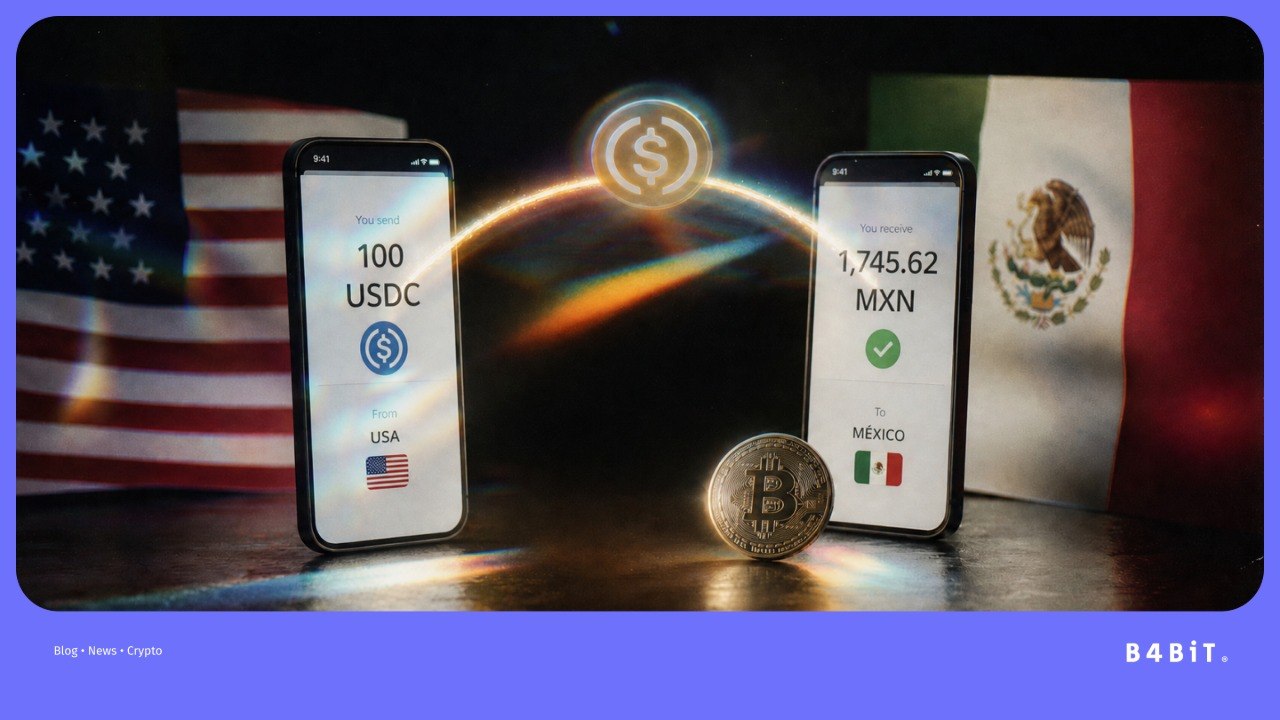
How to Send and Receive Crypto Remittances Between USA and Mexico, Without Fees
13 Aug 2026
For many Mexican families, receiving money from the United States, or anywhere else in the world, is part of the monthly budget. That money helps pay rent, food, utilities, or education. That’s why every dollar counts.
The problem comes when money transfers to Mexico don’t always cost only what appears as a “fee”. There can also be exchange rate differences, intermediation charges, and waiting times that make your family member receive fewer pesos than you expected.

How much does it cost on average to send money to Mexico today
These extra costs are not a minor detail. According to the World Bank, sending money from the United States to Mexico had an average total cost of 4.54% during the third quarter of 2025. That percentage includes the service fee and the margin applied to the exchange rate. Basically, on a $200 transfer, it would represent approximately $9.08.
An alternative is to send digital dollars using USDC, a currency designed to maintain a 1-to-1 relationship with the US dollar. In this guide, we explain how it works, what costs you should check, and how to convert the balance to pesos via SPEI.
How sending money with crypto works (the version you’d explain to your mom)
Although the idea of sending money with crypto may sometimes seem crazy, it’s simpler than it appears. The sender buys USDC with their dollars and then sends it to the recipient’s wallet. Think of it as passing money from one envelope to another, only the envelope travels through a digital network.
The recipient can have the USDC almost instantly, although the time depends on the network and transaction validation. Afterwards, they can keep it as digital balance or convert it to Mexican pesos and withdraw it via SPEI.
You don’t need to learn complicated words to use this system. Before confirming, just check three things: how much you’re sending, which network you’re using, and the recipient’s exact address.
Sending from USA to Mexico
Since we’re sending money from the United States, this is where the process begins. It ends when the money is in your family’s hands in Mexico and they confirm they’ve received it. Now, throughout that process there are steps to follow that we leave below:
-
Register and verify your account. Complete the data and perform identity verification. It’s also recommended to activate all available security measures.
-
Buy USDC with your dollars. Choose the available payment method, indicate how much you want to send, and check how many USDC you’ll receive before confirming.
-
Request recipient’s details. Your family member must share their USDC-compatible wallet address. The safest way is to copy it directly or scan a QR code.
-
Check the fees. Before hitting “send”, check how much you pay and how much USDC your family member will receive. B4bit has a 0.95% fee per operation, with no monthly fees or hidden charges. For example, if the fee is calculated on a 200 USDC send, the charge would be 1.90 USDC. The confirmation screen must show you the exact amount applied to your operation.
-
Confirm the network. The network you select must be the same one the destination wallet can receive. If you send funds through the wrong network, the operation may not reflect correctly and recovering the USDC would be quite complicated.
-
Authorize and save the receipt. When all data is correct, confirm the send. Also save the operation identifier until your family member tells you: “It arrived”.
If you make the send through B4bit, check the cost breakdown before hitting “confirm”. That way you’ll know what amount you’re paying, what fee applies, and how much your family member will receive exactly.
Receiving in Mexico and converting to pesos
Receiving USDC doesn’t mean you have to keep it as a digital asset. If you need to use the money to buy food, pay utilities, or have cash available, you can convert it to Mexican pesos and request a bank withdrawal.
To do this, register a Mexican account in your name and provide the 18-digit CLABE. Before confirming, compare each number with the data shared by the recipient. Keep in mind that a single wrong digit can cause delays or send the money to an incorrect account.
The SPEI withdrawal has a fixed cost of 1 USDC plus 0.35% spread on the pesos conversion. This amount must be considered when calculating how much will finally arrive in the bank account.
On the other hand, the crediting time may vary depending on operation validation, banking hours, and SPEI functionality. Check the withdrawal status until it appears as completed.
How much you can save vs. a traditional remittance
The difference isn’t understood by looking only at the fee percentage. To know if an option really suits you, you have to calculate how much leaves the United States, how much is deducted during the process, and how much your family member finally receives in Mexico.
To see it with better perspective, let’s imagine we’re going to send 200 dollars. We already know that, according to the World Bank, the average cost when sending money from the United States to Mexico is usually approximately 4.54%. That percentage includes the fee and the margin applied to the exchange rate. On a $200 send, the average cost would be approximately $9.08.
Now let’s see how it would be if we chose cryptocurrencies. With B4bit, the fee is 0.95% per operation. On a $200 send, that equals $1.90. To withdraw the balance in Mexico, we’d have to add 1 fixed USDC and 0.35% spread on the pesos conversion.
The USDC send would cost around $3.59, compared to $9.08 for the traditional average. The difference would be about $5.49. Watch out, this isn’t guaranteed savings. The percentage may vary depending on the provider you choose.
Frequently asked questions
Before using a new way to send money to Mexico, it’s normal to have some doubts. Here are direct answers, without fancy words or unnecessary turns.
Is it safe to send and receive USDC? It can be a practical option, but it’s not risk-free. Protect your account with a secure password, activate available authentication, and never share access codes or recovery phrases. Remember that virtual assets are not legal tender in Mexico nor do they have the backing of a financial institution.
What happens if I get the address or CLABE wrong? Here you really need to be careful. A USDC transfer cannot be cancelled after being sent. If you get the address wrong, recovering the money may be impossible. With CLABE, check the 18 digits before confirming the withdrawal and ask the recipient to share their data again if you have doubts.
Do I need to have crypto before using this method? Not necessarily. You can buy USDC with dollars using a compatible payment method and send it from the same platform. The recipient also doesn’t have to know about crypto. They can convert the balance to pesos and withdraw it to their bank account via SPEI.
How long does the money take to arrive? USDC can arrive almost instantly once the operation is validated, although the time depends on the network and platform. Afterwards, the pesos withdrawal via SPEI is processed quickly when the data is correct and banks are operating normally.
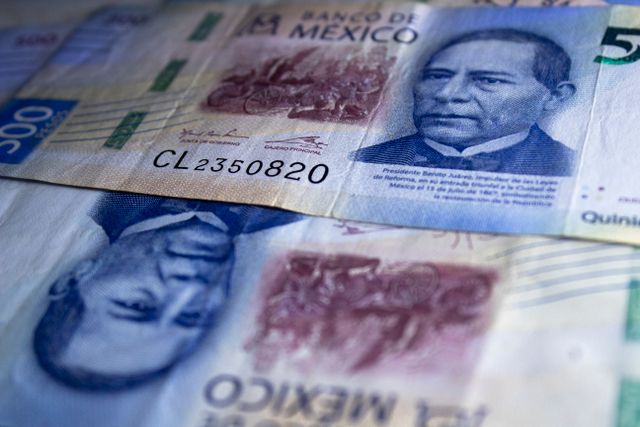
Risk notice
USDC is designed to maintain a 1 USDC to 1 dollar relationship, but any digital asset involves operational risks. These may relate to the network, custody, service interruption, or human error when sending.
Always verify the address, network, CLABE, fees, and final amount before confirming. Don’t share your access data and don’t send an amount you’re not willing to lose if an error occurs.

What Is Inflation and How Does It Affect Your Money in Mexico?
You leave the supermarket with the same grocery bag you had a year ago, but it holds fewer things. Or you get…
Zelle Doesn’t Work in Mexico: Here’s What You Can Use Instead
If you have friends in the United States, you’ve surely heard of “Zelle”. The problem is that Zelle doesn’t work in Mexico…
What is a token? Bitcoin, altcoins and stablecoins: the differences nobody explains well
I remember that in our first days in crypto, everything sounded the same; token, cryptocurrency, altcoins… Aren’t they all the same? Sorry…