Why Does Bitcoin Go Up and Down? The Real Reasons Without the Hype
16 Jun 2026
If you’ve ever seen Bitcoin’s price make a huge jump from one moment to the next, don’t worry, that’s completely normal, at least for this cryptocurrency. A lot of people see how Bitcoin go up and down, feel the shake, and want to understand what happened without reading a technical manual.
The thing is, Bitcoin moves for several reasons at the same time. Sometimes the fixed supply matters more, sometimes it’s news, sometimes big money enters the market, and other times short-term noise makes everything look bigger than it really is.
In this article, we’re not going to tell you when it will go up or when it will go down. Nobody has a crystal ball to know that (and be careful with anyone who says they do). We’re going to explain, with simple facts, why Bitcoin moves the way it does and what you can do if you want to stay in crypto without living with the ups and downs glued to your chest.
Spoiler: there isn’t just one reason
A decentralized project like Bitcoin doesn’t go up or down for just one reason. Its price changes when several factors come together. These include its limited supply, changing demand, news that shifts market mood, and even moves from large players that can push the price harder than it seems.
Put simply: if more people want to buy than sell, the price tends to go up; if the opposite happens, it goes down. What makes Bitcoin different is that this tension between buyers and sellers can move very fast, because the crypto market reacts to headlines, expectations, and emotion almost in real time; plus, unlike traditional stock markets or even banks, Bitcoin doesn’t close at night or on weekends.
That’s why it’s not a good idea to read every rise as a forever win or every drop as a disaster. In crypto, what you see on screen is often a mix of hard data and human reaction at the same time.
Factor 1 — The supply is fixed, demand is not
Bitcoin has a simple rule that helps explain a lot of how it behaves. Pay attention: its maximum supply is capped at 21 million coins. In 2026, more than 20 million have already been mined, so there is less than 1 million left to be issued. That makes new supply scarcer over time.
Now, a limited supply does not mean the price stays still. Quite the opposite. Since demand changes every day, any increase or decrease in buying interest can move the price strongly.
Think of it like when everyone wants the same product and only a few pieces are available. If people get excited and buy more, the price usually goes up, but if interest cools down or many people decide to sell at the same time, the price can fall fast.
That’s why I’m telling you Bitcoin doesn’t work like a savings account or like something “stable” on its own. Its scarcity gives it a special logic, but it does not make it immune to shifts in market mood.
And here’s the important part so we don’t overstate things: limited supply helps explain why Bitcoin can react so strongly, but it does not let you predict how much it will go up or down.
Factor 2 — News moves the price
With Bitcoin, news doesn’t just inform people, it also changes market mood. If a headline creates confidence, fear, or doubt, a lot of people react quickly and that can move the price within hours.
That happens because crypto trades in a market that is alive all the time, so any comment about regulation, liquidity, ETFs, geopolitical conflict, or big buys and sells can change investor behavior.
In fact, a recent example was Bitcoin’s drop on June 9, 2026 after the U.S. military response to Iran. The risk of liquidations was high and that showed up in the cryptocurrency’s price.
As you can see, the news doesn’t even have to be “about Bitcoin” to move it. Sometimes it’s enough for the market to sense more risk or less appetite for volatile assets for many people to sell first and ask questions later.

Why do social networks affect the price?
Social networks affect asset prices, and that’s a fact. Why? Because in crypto, sentiment moves incredibly fast. A viral post, a comment from a well-known figure, or a thread that catches fire in minutes can push people to buy out of emotion or sell out of fear of getting stuck.
Of course, that doesn’t mean any tweet can move the market by itself. It means that when the market is already sensitive, social networks can amplify the move and make it sharper than it seemed at first.
In those cases, the important thing is to cut through the noise and figure out whether that news actually changes demand, liquidity, or market confidence.

Factor 3 — Large institutional investors
Bitcoin is not what it used to be. It no longer moves only because people buy from their phones; money also comes in from funds, companies, and regulated products like ETFs. When those players buy or sell in blocks, the price feels it faster because they are moving large and, in some cases, concentrated volumes.
To give you an idea, in January 2026 Bitcoin ETFs added 843.6 million dollars in a single day, while Strategy kept accumulating BTC and surpassed 673,783 bitcoins in its treasury at the start of that month.
Factor 4 — The halving
Let’s start with the basics. What is the halving? It’s a programmed event in Bitcoin’s code that cuts in half the reward miners receive for validating blocks. It happens roughly every four years. The next one is already projected for around 2028.
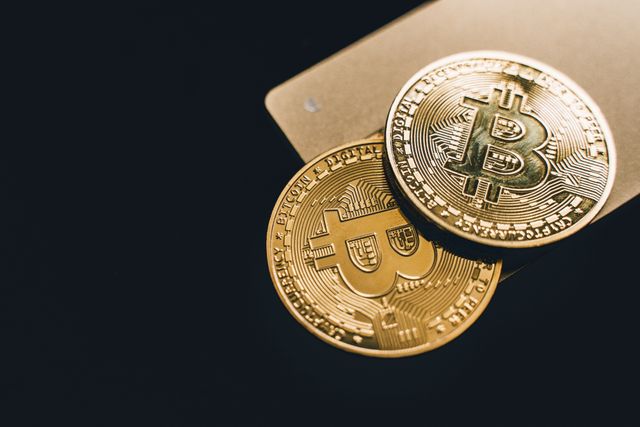
The reason it matters is simple economics. Less new Bitcoin enters the market, so fresh supply slows down. That can affect the price, but not automatically or immediately. In fact, each cycle can behave differently, and what happened before does not guarantee what happens next.
Will volatility disappear?
The short answer is no. Bitcoin can become a little more stable over time, but it remains an asset that reacts strongly to news, institutional flows, liquidations, and shifts in sentiment. Even today, important volatility episodes still appear.
That does not mean it is always making huge jumps. Its volatility has fallen compared with earlier years, which is something that often happens when a market matures and more professional capital enters it, but we are still not dealing with a “calm” asset like a savings account or a fixed-income instrument.
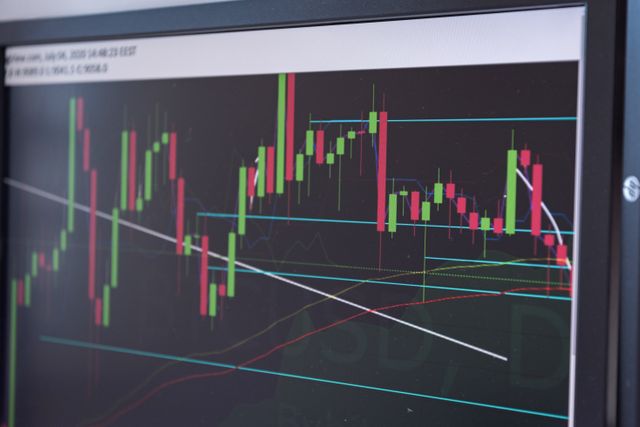
Bitcoin may be less wild than before, but it still moves a lot. That’s why understanding its causes matters so much. Not to predict the next price, but to understand why one day it opens green and the next it gives you a scare.
How to protect yourself from volatility without leaving crypto
Bitcoin is not the whole crypto ecosystem. You don’t need to run every time Bitcoin moves hard. A calmer alternative is to use stablecoins like USDC to store value while you wait for a better moment to get back in, or simply to avoid leaving all your balance exposed to the same roller coaster.
Think of it as having part of your money in “pause mode” inside the same ecosystem. It’s not a promise of gains or a price prediction. It’s more of a practical way to reduce shocks when the market gets nervous. If you’re more into calm than risk, just keep your pesos in USDC from your B4bit account and problem solved. What are you waiting for?

Zelle Doesn’t Work in Mexico: Here’s What You Can Use Instead
If you have friends in the United States, you’ve surely heard of «Zelle». The problem is that Zelle doesn’t work in Mexico…

POV: You explain to your coworker at lunch what Bitcoin is
Surely it’s happened to you that, halfway through lunch hour, some coworker comes up to ask you about something they heard in…

Freelancer in Mexico: How to Get Paid by Foreign Clients
You’ve just finished the project your client asked you to work on. You send over the files and the client tells you…