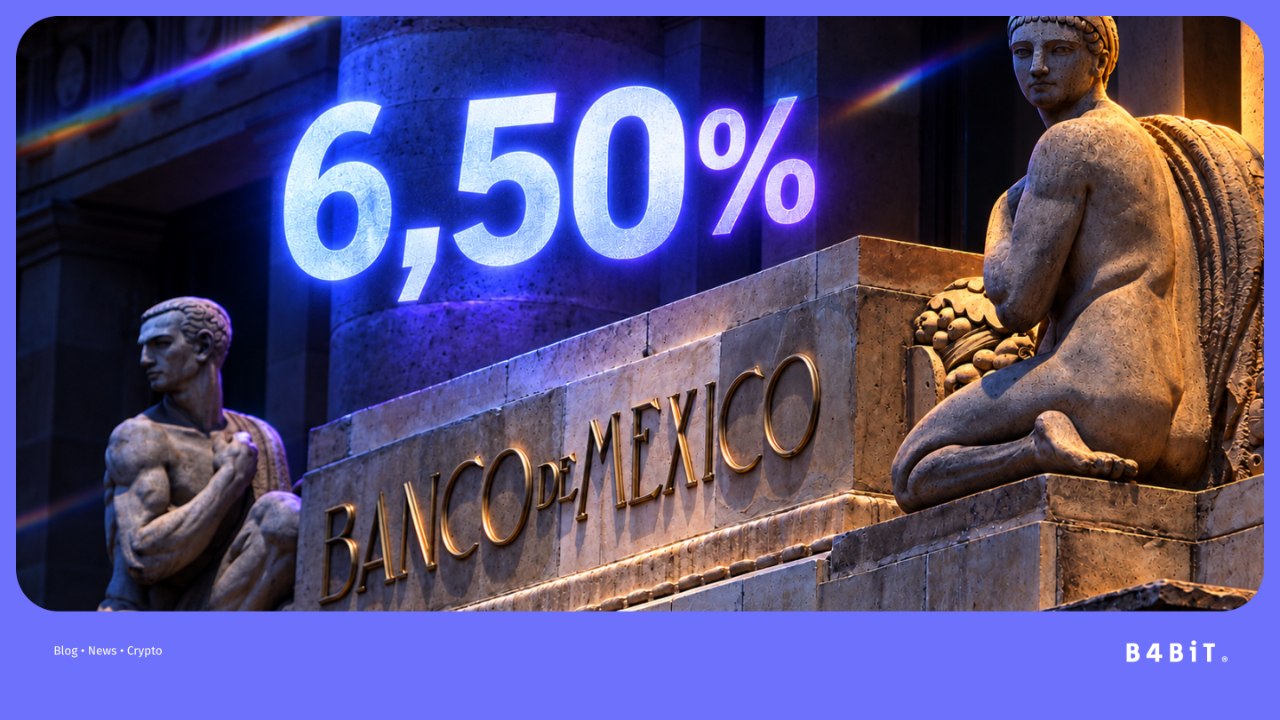
Banxico Keeps Its Interest Rate at 6.50%: What It Means for Your Loans and Savings
16 Oct 2026
“Banxico keeps its interest rate at 6.50%.” You’ve probably seen that headline in the news. It sounds important, sure, but there’s one question that really matters: what does it have to do with your credit card payments, a car loan, or the money you have saved?
Quite a lot, even if you don’t notice the effects right away. First, let’s understand what the Banxico interest rate means, why it stayed at 6.50%, and how it can eventually affect your wallet. No complicated charts or economics lectures required.
What Banxico Decided on September 24
On September 24, 2026, the Governing Board of the Bank of Mexico decided to keep the Banxico target rate at 6.50%. This wasn’t the first pause. The rate had already remained at 6.50% at the meetings on June 25 and August 6, making September the third consecutive decision without a change. For context, interest rates used to be much higher. In February 2024, the rate was still at 11.25%. It then began to fall gradually, with several cuts throughout 2024 and 2025.
There were two more cuts in 2026. Banxico reduced the rate by 25 basis points on March 26 and another 25 basis points on May 7. After that, it kept the rate at 6.50%.
September’s decision came after a move in the opposite direction in the United States. On September 16, the Federal Reserve raised its federal funds rate range by 25 basis points, bringing it to between 3.75% and 4.00%.
What about inflation in Mexico? During the first half of September, annual inflation stood at 3.42%, according to INEGI. You can check all of Banxico’s monetary policy decisions here.
What Is the Banxico Interest Rate, in Plain English?
The name makes it sound more complicated than it really is. When we talk about the Banxico interest rate, we’re referring to the one-day Interbank Interest Rate. It’s the benchmark rate the Bank of Mexico uses to conduct its monetary policy. Put simply, it works like a kind of base price for money within the financial system.
Think of a tortilla shop. If the price of tortillas changes, that can eventually affect the cost of chilaquiles, tacos, and any other dish made with them. Prices don’t necessarily rise by the same amount or on the same day, but the cost of the main ingredient matters.
Money works in a similar way. The interbank rate influences other interest rates across the economy. Over time, those changes can affect loans, credit cards, financing, and even how much different institutions pay you to keep your money in savings products.
Banxico uses this tool for one very specific purpose: keeping inflation low and stable. Its permanent inflation target is 3%, with a one-percentage-point variation range above or below that figure.

Why Does the Rate Go Up or Down?
Here’s how it works: when inflation is putting too much pressure on prices, a higher interest rate makes borrowing more expensive and helps moderate spending across the economy. When price pressures ease and economic conditions allow it, Banxico can lower the rate.
Keep in mind that there’s no automatic formula that says, “Inflation went down, so interest rates will drop tomorrow.” Before making a decision, the Governing Board considers several factors. If you want to understand the first piece of that puzzle, we explain what inflation is and how it affects your money in Mexico.
How It Affects Your Wallet
Here’s where things get interesting, because you don’t borrow money directly from Banxico, and you won’t see a line on your bank statement saying “Banxico rate: 6.50%.”
The effects reach you through other channels. Let’s look at them.
Credit Cards and Loans
Just because the Banxico rate is at 6.50% doesn’t mean your credit card will charge you 6.50%. Not even close. Financial institutions set their lending terms based on many factors, including the type of product, risk, associated costs, and market conditions.
When a loan has a variable interest rate, changes in benchmark rates can eventually affect its cost. But the change doesn’t have to happen immediately or by the same amount.
If you want to know how much a credit card really costs you, there’s another figure that’s much more useful: the CAT, or Total Annual Cost. It includes the interest rate as well as other costs associated with borrowing. That’s why it can be considerably higher than the 6.50% you see in the news. If you want to check credit card indicators, you can find the information published by Banxico on its credit card basic indicators page.

Mortgages and Car Loans
First, you need to check one thing: is your interest rate fixed or variable? If you already have a mortgage or car loan with a fixed interest rate, Banxico keeping its rate at 6.50%, raising it, or lowering it doesn’t automatically change the rate you agreed to. Your contract still has the terms you originally signed up for.
With a variable rate, things are different. The cost can adjust according to the benchmark specified in your contract, meaning changes in general interest rate conditions may eventually affect what you pay. So before worrying about every Banxico announcement, it’s worth checking your contract to see what type of rate you have.
Your Savings
The other side of the coin is the money you have saved. The rates offered by different regulated savings accounts and products can also change as overall interest rate conditions in Mexico shift.
When Banxico lowers its rate, what some institutions pay you to keep your money with them may eventually fall too. If the rate rises, the opposite can happen. But it doesn’t work like an on-and-off switch.
Since Banxico kept its rate at 6.50% for the third consecutive meeting, there was no new target-rate change in September that would, by itself, suggest a sudden shift.
What you can do is check how much your money is actually earning and compare it with inflation. One number alone doesn’t tell you much if you don’t know how quickly prices are rising at the same time.

What Could Happen at the Next Meetings?
We’re not going to pretend we have a crystal ball. In its September 24 statement, Banxico made it clear that future decisions will depend on how disinflation progresses and on factors such as the exchange rate, economic conditions, and inflation expectations.
It also expects headline inflation to reach its 3% target in the fourth quarter of 2027. That’s a forecast from the Bank of Mexico itself, not a guarantee that things will unfold exactly that way.
So when will we hear more? According to Banxico’s official 2026 calendar, there are two monetary policy announcements left this year: November 5 and December 17. Until then, as of October 6, 2026, the current rate remains 6.50%.

What You Should Check, Whether Rates Change or Not
Following every Banxico meeting as if it were the World Cup final isn’t necessary. But there are four things about your own finances that you should know:
-
Check whether your debts have fixed or variable rates. This helps you understand which debts could be affected by interest rate changes and which will keep the terms you signed.
-
Compare the CAT on your credit cards. Don’t focus only on the advertised interest rate. The CAT gives you a more complete picture of borrowing costs.
-
Find out which of your debts costs you the most. If you have several, you should know their interest rates and CATs so you can identify the most expensive one before deciding how to organize your payments.
-
Check how much your savings are earning and compare it with inflation. Looking at both figures together gives you much more context than looking at just one rate.
The Banxico rate doesn’t appear directly on your bank statement, but it’s part of the chain of events that affects what you pay to borrow money and influences what you might earn by saving it. It’s worth checking in on it a few times a year.

Frequently Asked Questions
1. What Is Banxico’s Interest Rate Today?
As of October 6, 2026, the Bank of Mexico’s target rate is 6.50%. The Governing Board decided to leave it unchanged on September 24, 2026, after doing the same on June 25 and August 6. You can check for updates on Banxico’s official monetary policy announcements page.
2. How Often Does Banxico Set Its Interest Rate?
Banxico announces its monetary policy decisions on dates established in an annual calendar. For 2026, it scheduled eight announcements. Following the September 24 decision, the remaining announcements are scheduled for November 5 and December 17.
3. Is the Banxico Rate the Same as the Interest Rate on My Credit Card?
No. The 6.50% figure is Banxico’s target rate, not the rate a financial institution has to charge you for a credit card or loan. To better understand the cost of a credit card, check its interest rate and, above all, its CAT.
4. Why Didn’t Banxico Follow the Federal Reserve?
Because Mexico’s monetary policy decisions don’t have to automatically copy those of the United States. In fact, Banxico explained in its September 24 statement that the two countries have different macroeconomic conditions. That’s why Mexican monetary policy doesn’t have to respond mechanically to changes in the federal funds rate.
5. What Is a Basis Point?
A basis point is equal to 0.01 percentage points. So when you hear that Banxico lowered its rate by 25 basis points, it means the rate went down by 0.25 percentage points. For example, a move from 7.00% to 6.75%.
Mexico’s Anti Money Laundering Law 2026: How Much Can You Pay and Deposit in Cash?
First things first: this article is not financial advice. Its content is for informational purposes only. If you have any questions, it…

What Is KYC? Why They Ask for Your ID and Selfie When Opening a Crypto Account
Opening a crypto account usually brings up the same old question: why do they ask for my ID, a selfie, and sometimes…

What Is Inflation and How Does It Affect Your Money in Mexico?
You leave the supermarket with the same grocery bag you had a year ago, but it holds fewer things. Or you get…