What is Blockchain? The explanation nobody gave you in school
9 Jun 2026
If you send money, receive a transfer, or have ever had to trust “the system” to make sure something arrives properly, this topic matters to you. Blockchain exists because for years digital money depended on intermediaries to work, and trust in those intermediaries was not always cheap or well-placed.
In short, blockchain is the way to keep track of transactions without depending only on a bank, person, or company. Even if it sounds very technical, you can think of it as a way to move value and record information without asking a central referee for permission every time.
We are not going to explain technical nonsense here. We are going to look at why this record was created, what it is used for, and why it matters in your everyday life. Simple as that.

Blockchain in one sentence that actually makes sense
Blockchain is like a shared accounting book kept by a lot of people, but not one locked away by a single person. It is a book that everyone can check at the same time. If someone tries to change a number or move an account, everyone else notices right away and checks whether that change matches their own copy.
Imagine a neighborhood notebook where everyone can see what was written down, and nobody can erase a debt because they would have to erase it in every copy at the same time. And when a new debt is added, every copy has to update at the same time too. That makes the information much harder to alter and, in turn, much safer.
That is why blockchain is described as a way to record information in a shared system that is almost impossible to manipulate.
Why blockchain exists
Very few people look at it this way, but the 2008 financial crisis was a turning point for the financial world. A lot of people saw large banks move, lend, and even risk other people’s money without proper control. The result was a very clear problem: distrust in the traditional banking system.
Bitcoin (BTC) appeared to solve that. Satoshi Nakamoto explained the idea in the whitepaper in 2008, and launched the cryptocurrency in 2009. It proposed a peer-to-peer payment system without intermediaries. It was a way to move value without depending on an institution that decided for everyone, and instead let people decide over their own money in a digital way.
Bitcoin brought a different model: the network itself kept track of what had already been spent and what was still available, without a single institution approving everything. The core idea was very simple: your money should not be left in the hands of third parties. You no longer had to trust the bank; now you only had to trust the logic of an immutable, mathematical system.
The double-spending problem
Satoshi Nakamoto did not just create technology that did not depend on banks or third parties. He also solved one of the biggest digital problems at the time. In digital space, copying is incredibly easy. A file, a photo, or a message can be duplicated without any trouble. With money, that would be a disaster, because the same unit cannot appear twice as if nothing happened. That problem is called “double spending”.
That was the real wall Bitcoin came to break through. That was the true Achilles’ heel of digital money: a single unit could be tried twice. If there is no reliable way to know which payment happened first, the system breaks because nobody can trust that money anymore.
Bitcoin solves this. Instead of leaving verification in the hands of a single institution, the network records and orders transactions, so everyone can see which money has already been used and which has not. That way, any attempt to spend the same money twice is detected and rejected.
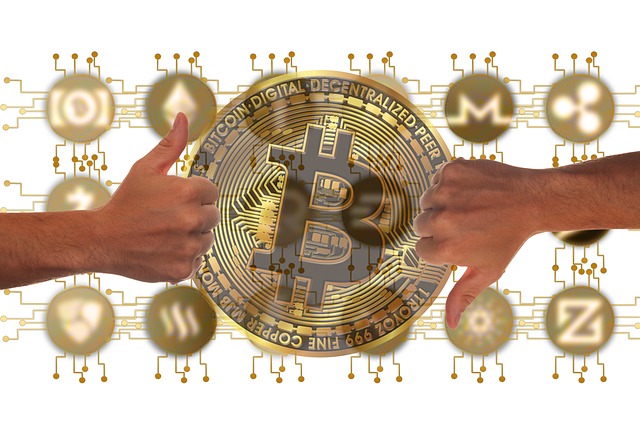
How it works in practice? (No code, promised)
Think of a transaction like a new receipt that someone sticks onto a long strip of existing receipts. Every time money moves, that operation is grouped with others and forms a new block, which is then added to the chain that was already there.
The key here is that the previous receipt is not erased, and everything is not rebuilt from scratch. A chain of records is built step by step, so changing one piece would be like trying to peel off a receipt without anyone noticing. That is why the information stays organized and becomes harder and harder to alter.
Who checks that everything is correct?
When a transaction enters the Bitcoin blockchain, no single person approves it. Unlike banks, the whole network checks it, and that is the point. There is no boss raising a thumb from above, but rather a combination of validators and miners that confirm everything matches before the transaction is recorded.
Think of a vote where thousands of people review the same data, and only if there is agreement does it get written down. In Bitcoin, that shared review keeps things in order and prevents someone from slipping in a fake transaction or trying to spend the same money twice. And this happens roughly every 7 minutes, again and again with each block of transactions. That is where the name “blockchain” comes from.

Is blockchain the same as Bitcoin?
The short answer is no. They are not the same. Blockchain is the base technology, and Bitcoin is an application of that technology, just like WhatsApp is an app that runs on the internet.
Put more simply, blockchain is the infrastructure that stores and organizes information. Bitcoin, Ethereum, and USDC are examples of projects or assets that use that infrastructure to work. That is why blockchain is often described as the base layer, and Bitcoin as the first famous case that used it.
This difference matters because later you will see tokens, stablecoins, and other assets that live on different networks, and not all of them do the same thing or serve the same purpose.
What blockchain is used for beyond crypto
Blockchain is not only for Bitcoin or speculation. It is also useful when you want control and transparency in processes where it matters to know what happened, when it happened, and who moved it.
A clear example is food traceability. Walmart has used blockchain to track products through its supply chain, from origin to store, to improve food safety and detect problems faster.
In healthcare, the idea is similar. Blockchain can be used to manage medical records and consent more neatly and securely, with less risk of information being lost or changed without permission.
There are also automated contracts. Blockchain helps certain rules execute on their own when a condition is met. That can be useful for payments, deliveries, or validations without so much paperwork in the middle. Not bad at all, right?
Why this matters to you
If you send money to your family, this affects you directly. Traditional remittances are usually expensive because they go through banks, intermediaries, and processes that make the transfer slower and more costly. In the end, part of your money stays behind in fees.
With crypto, sending and receiving money from anywhere in the world can be much simpler and, above all, cheaper. The transfer happens on the network, with fewer intermediaries, which opens the door to moving money with less friction and less waiting.
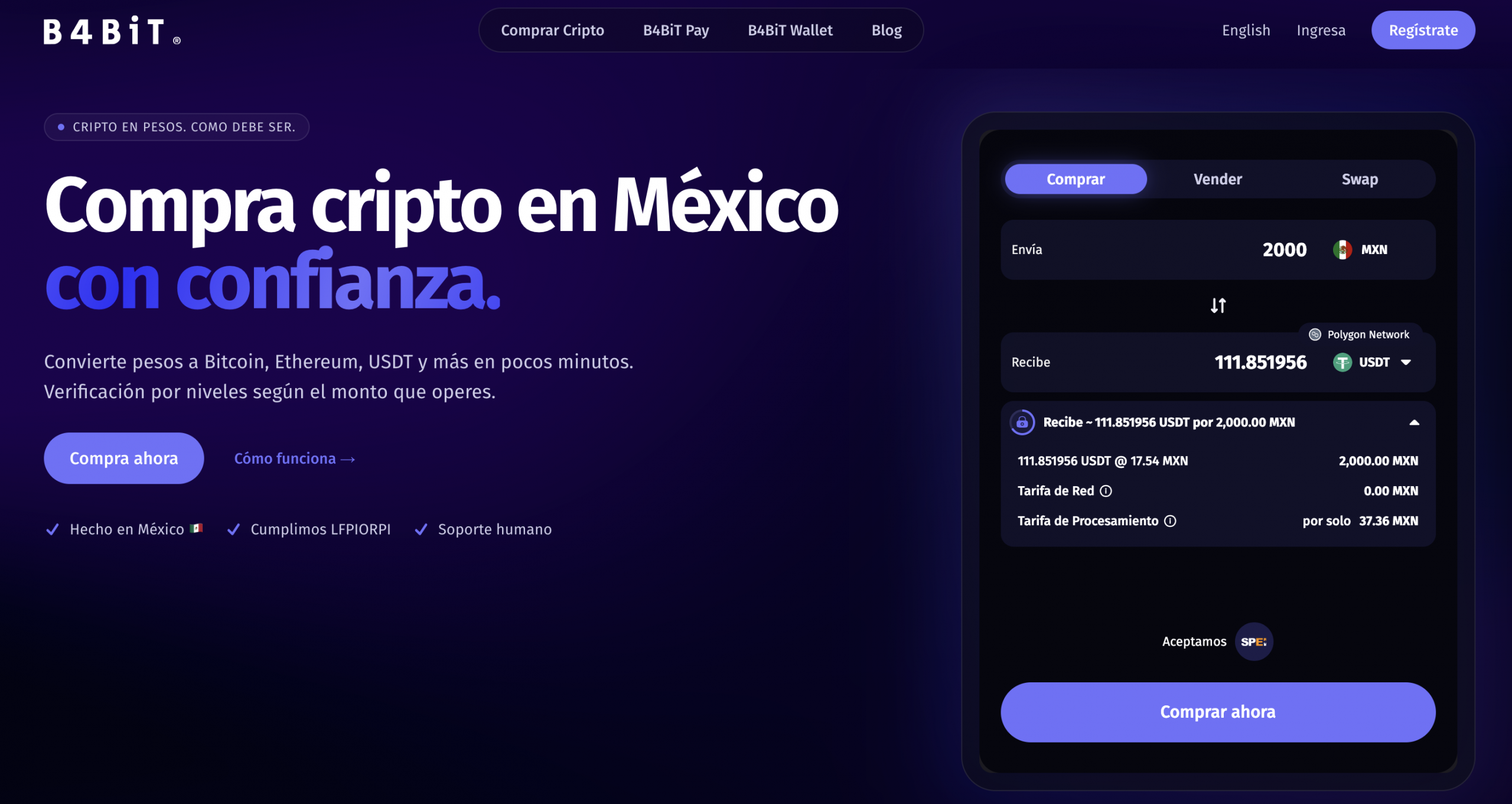
That is why B4bit is a very good option. It helps you move your money more clearly, faster, and without the costs that usually come with traditional rails. If what you really want is to use blockchain technology and move money without making life harder for yourself, you can open your account in just a few minutes.
What you should know as a user
Now that all that is clear, there are four things worth keeping in mind before moving money on blockchain. This is not classroom theory; it is the kind of thing that can save you from a headache or a misunderstanding the first time you make a transaction. We like to speak plainly, so along with the good stuff, here are the points you should keep in mind:
-
They are irreversible. If you send funds to the wrong address, there is no “cancel” button like in other apps. Once the transaction is confirmed, it stays that way.
-
They are public, but they do not show your name. What appears on the network are addresses and movements, not your ID card. That is why they are described as pseudonymous, not anonymous.
-
They can be fast, but it depends on the network. Some confirm in seconds and others take longer, especially when activity is high.
-
They almost always carry a network fee. It is usually a small cost for processing the transaction, although it can go up or down depending on the network and how congested it is.
Knowing that already puts you ahead of most people. And if you want to get started without making things complicated, at B4bit you can begin in 3 minutes.

Why Does Bitcoin Go Up and Down? The Real Reasons Without the Hype
If you’ve ever seen Bitcoin’s price make a huge jump from one moment to the next, don’t worry, that’s completely normal, at…
Which network should I choose to send, receive, or store my cryptocurrencies?
Which network should I choose for my cryptocurrencies? It comes down to one question. When you want to send or receive USDC,…
Zelle Doesn’t Work in Mexico: Here’s What You Can Use Instead
If you have friends in the United States, you’ve surely heard of «Zelle». The problem is that Zelle doesn’t work in Mexico…